
Estimated Read Time: 6 minutes
Year-Round Safety Planning and SchedulingDisclaimer: The following story is fictional but inspired by real challenges and successes observed in churches through ARM’s work. It is designed to illustrate the importance of a proactive, year-round safety approach.
A Wake-Up Call in the Kitchen
During a Sunday fellowship meal prep, a pan on the stove in the church kitchen caught fire. The quick thinking of the volunteers inside—smothering the flames with a metal lid—kept the incident from becoming a disaster. Everyone breathed a sigh of relief, but when Safety Officer Joni arrived to check on the situation, she noticed something alarming: the kitchen didn’t have a fire extinguisher.Later that day, she mentioned it to Pastor James. At first, it seemed like a simple oversight—just buy and install a fire extinguisher. But as they talked, other questions began to surface: When was the last time the church checked all its extinguishers? Were the first aid kits stocked? Had anyone tested the alarms recently? These weren’t isolated tasks—they were part of a bigger picture of preparedness that no one had been tracking.
It became clear that this wasn’t just about one missing piece of equipment—it was a symptom of a larger gap: the church had no coordinated, year-round safety schedule to ensure critical checks were being made.
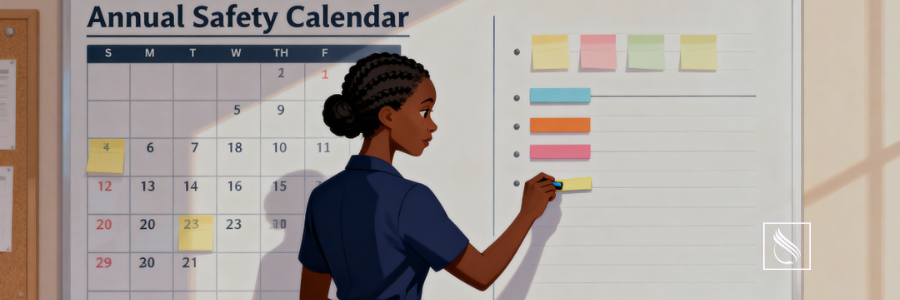
Right then, they agreed to create an annual safety calendar to make sure safety tasks were planned, tracked, and completed.
Why an Annual Safety Calendar Matters
A well-structured safety calendar: - Ensures no critical tasks are overlooked. - Spreads work evenly across the year. - Keeps the safety committee and leadership accountable. - Builds confidence in the congregation.Key Elements of a Church Safety Calendar
1. Monthly Checks
- Facility walk-throughs: Inspect for hazards, damage, or maintenance needs.
- First aid & AED checks: Verify supplies are stocked and equipment is operational.
- Lighting & security systems: Test indoor/outdoor lighting and alarms.
2. Quarterly Actions
- Emergency drills: Alternate between fire, severe weather, and missing child scenarios.
- Policy reviews: Revisit safety policies to ensure they’re up to date.
- Training refreshers: Offer short refresher sessions for volunteers.
3. Seasonal Preparations
- Spring: Prepare for Safety Sabbath; inspect roofing and drainage after winter.
- Summer: Review severe weather procedures; check playground and outdoor spaces.
- Fall: Inspect heating systems; prepare for darker evenings with lighting checks.
- Winter: Review slip-and-fall prevention; ensure snow/ice removal plans are in place.
4. Annual Events
- Full emergency plan review: Update contact lists, evacuation routes, and procedures.
- Comprehensive facility inspection: Partner with local fire or law enforcement for expert input.
- Volunteer appreciation event: Celebrate your safety team’s work.
From Reaction to Routine
With their new annual safety calendar, Pastor James and Safety Officer Joni found that planning ahead reduced stress and improved preparedness. Safety wasn’t something they had to remember—it became part of the rhythm of church life.Next Step: Begin drafting your own annual safety calendar today. Start with the monthly tasks and build out to quarterly, seasonal, and yearly events.
